Proximal Hamstring Tendinopathy: Why Your Hamstring Pain Won’t Go Away
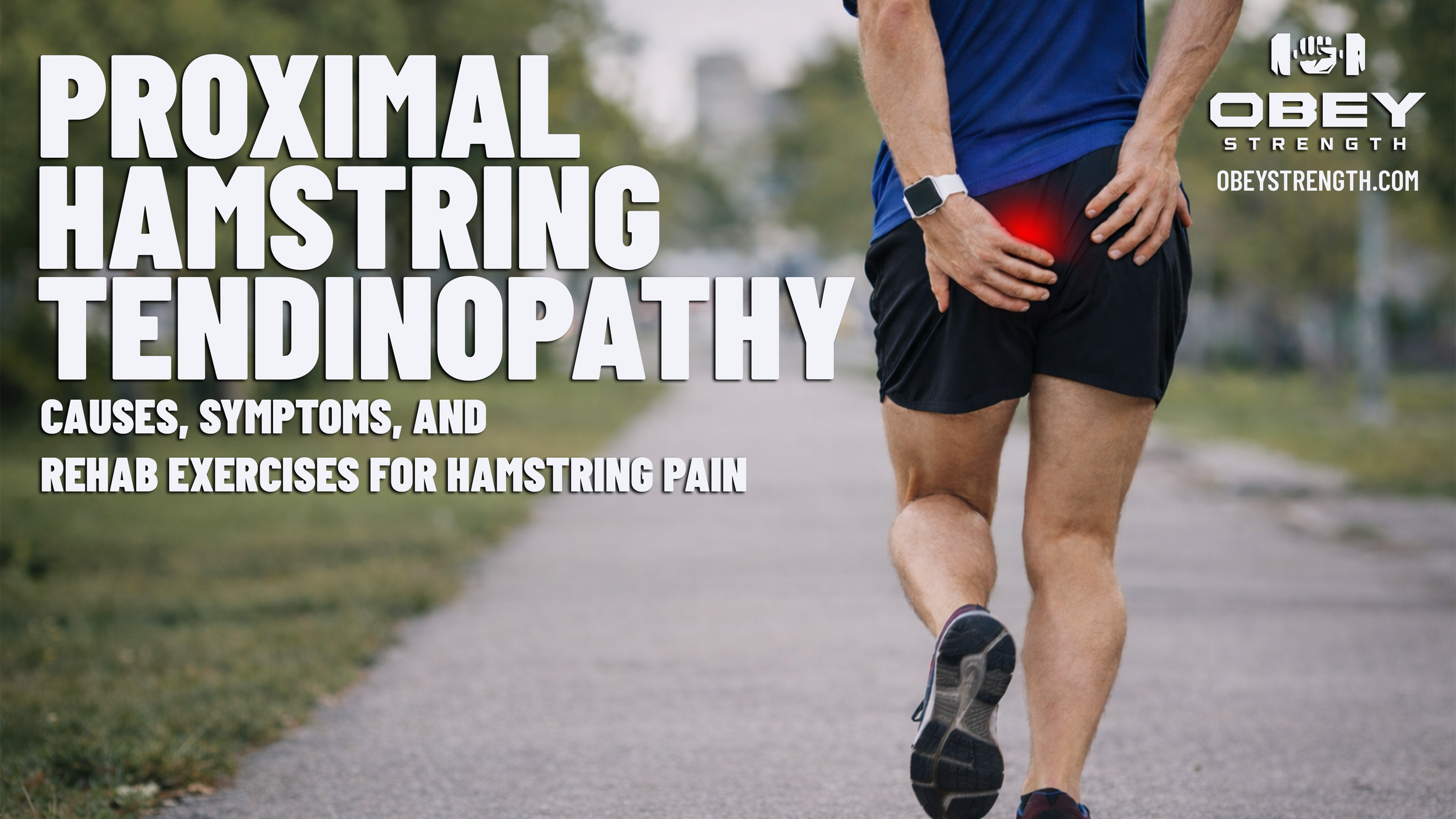
Hamstring pain is one of the most common issues I see in athletes, runners, and active adults. Many people assume it’s simply a hamstring strain or a “pulled muscle”, but sometimes the problem is something a little different, something we call Proximal Hamstring Tendinopathy or Tendinitis
If you’ve been dealing with pain high up in the hamstring near the glutes or butt muscles, especially when running, sitting, or stretching, we might suspect a possile hamstring tendinopathy.
In this article, I’ll walk you through:
What proximal hamstring tendinopathy is
Why it develops
Common symptoms
How rehab typically works
A few exercises that can help
My goal here isn’t to diagnose or treat you through a blog post, but to help you better understand what might be going on so you can make smarter decisions about your recovery.
What Is Proximal Hamstring Tendinopathy?
Proximal hamstring tendinopathy (often abbreviated PHT) is a condition involving pain, irritation, and degeneration of the hamstring tendon where it attaches to the pelvis at the ischial tuberosity, or the bone you sit on.
In anatomy, proximal refers to a structure that is closer to the center of the body, while distal refers to something farther away. In this case, pain along the hamstring attachment near the pelvis refers to the proximal hamstring. Distal hamstring tendinopathy refers to pain closer to the attachment across the knee.
Tendinopathy in general refers to a clinical condition characterized by localized tendon pain, functional limitations, and reduced tolerance to loading.
In the case of PHT, pain is typically provoked when the tendon is:
Compressed, such as sitting
Stretched, such as when stretching after a workout or when the leg is stretched forward during movements like running
Contracted under load, such as during exercise
The hamstrings cross both the hip and the knee, making it bi-articular. They experience high forces during movements like running, sprinting, lunging, and hinging.
Over time, if the load placed on the tendon exceeds what it can tolerate, irritation and structural changes can occur.
The way I explain it in simple terms is that when the hamstrings are unable to tolerate the demands of whatever activity you are performing, whether that’s due to strength and range of motion deficits, or simply just jumping into a new activity too quickly without progressing slowly, it irritates the hamstring tendon, causing pain and irritation.
The tendon basically tells you you’re doing too much; we need to calm things down.
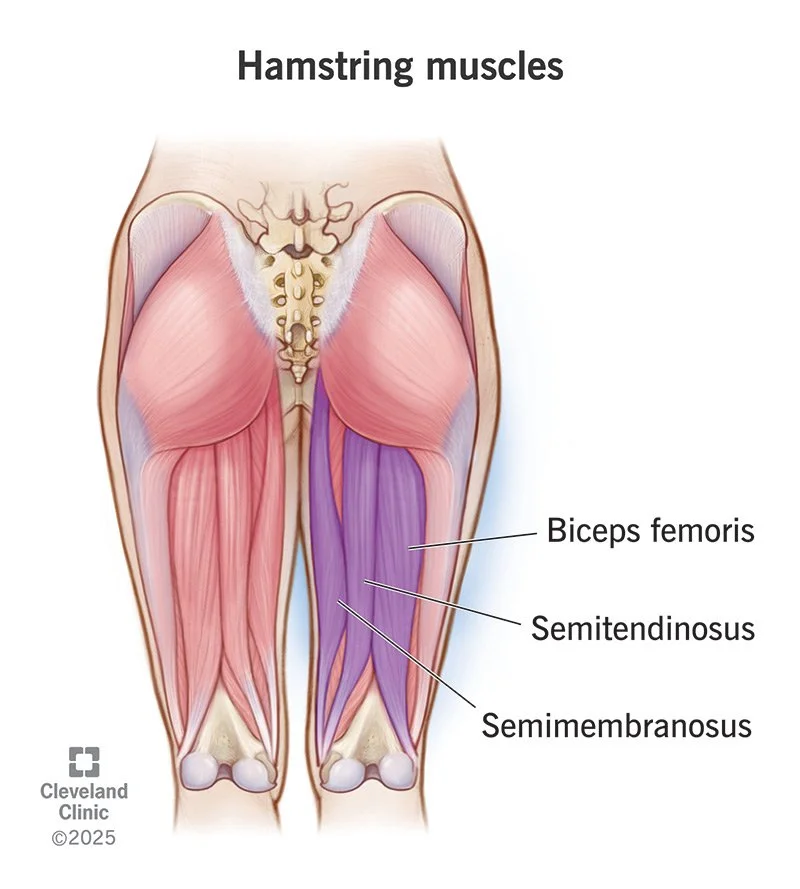
Source: Cleveland Clinic
Hamstring Anatomy
Your hamstrings consist of four muscles:
Biceps femoris (divided into the Long head and Short head)
Semitendinosus
Semimembranosus
The hamstrings play a major role in:
Hip extension (driving your leg backward)
Knee flexion (bending the knee)
Decelerating the leg during running
During running, especially sprinting, the hamstrings experience some of their highest loads during the late swing phase, when they eccentrically contract to slow the leg down before the foot makes contact with the ground.
This high demand is one of the reasons runners and athletes are commonly affected, especially those who ramp up their running mileage too quickly.
Common Symptoms of Proximal Hamstring Tendinopathy
The hallmark symptom of proximal hamstring tendinopathy is deep pain in the lower glute or upper hamstring area.
People often describe it as:
Pain near the sit bone
Pain when sitting for long periods
Pain when running, sprinting, or accelerating
Tightness or pain when stretching the hamstrings
Pain during exercises like deadlifts or lunges
It is very common for people to report that the pain improves as they warm up or as they move throughout their day, but returns later after activity or when the body cools down.
This pattern is very common with tendon-related injuries, as tendons love warmth and blood flow.
Why Proximal Hamstring Tendinopathy Develops
Like most tendon injuries, proximal hamstring tendinopathy usually develops from a combination of factors over time rather than a single event.
Common contributors include:
Too Much Too Soon
Increasing running mileage too quickly
Sudden increases in intensity
Adding hills or sprint work too quickly
High Mechanical Load
Activities like:
Sprinting
Hill running
Lunges
Heavy hinging movements
None of these are bad, but again, when you begin these activities with high loads too soon, the tendon may not be ready for these loads and will become irritated.
Excessive Stretching
Overstretching the hamstrings may actually increase compression at the tendon attachment and contribute to irritation. This is common in yoga, pilates, and individuals who always feel the need to stretch the hamstrings.
Other Risk Factors
These can include:
Age
Higher body weight
Metabolic health factors
Genetics
Certain medications
A Key Principle: Load Management
One of the most important aspects of treating proximal hamstring tendinopathy is managing tendon load appropriately.
In many cases, the goal is not to completely stop activity, but to modify loading so the tendon can recover while staying active.
Though this can be difficult when working with athletes who need ot maintain some level of activity during practice or leading up to a sporting event.
Runners are a great example of this. If you’re a runner, you know how difficult it can be to sit down and not run for two weeks while you rehab your hamstring, especially if you’re tapering for a 5k or marathon.
Trust me, I know. I work with a large population of runners, and we work together to determine how much running volume is okay to do while we rehab the hamstring.
A common guideline I use during rehab is keeping pain during activity below about 4 out of 10 and returning to baseline within 24 hours.
If pain lingers longer than that, it’s often a sign that the tendon was overloaded, and we might need to reconsider the activity load and intensity.
The General Rehab Progression
Most successful rehab programs follow a progressive loading approach.
A typical progression might include five stages:
Isometrics – building tolerance and reducing pain through muscle contractions without movement.
Isotonic strengthening – improving hamstring strength through loaded exercises like hamstring curls and hip extensions.
Kinetic chain strengthening – addressing the body as a whole, such as strengthening the glutes, quads, and calves
Compression tolerance – reintroducing deeper hip flexion movements that may previously have caused pain
Sport-specific activity, energy storage and release – preparing for running, sprinting, jumping, and sports
The idea is to gradually rebuild the tendon’s ability to tolerate load without overdoing it to allow it to return back to prior level of function.
Exercises That Are Commonly Used
Here are a few examples of exercises I often used early in rehab.
(Click the Exercise Name to watch a video)
1. Hamstring Bridge Hold
A simple isometric exercise.
Lie on your back
Place your heels on a bench or chair
Lift your hips
Hold for 30–45 seconds
This type of isometric exercise can help reduce pain and prepare the tendon for strengthening.
2. Single-Leg Bridge
Progressing to strengthening.
Lift hips while one foot remains on the ground or box
Keep the pelvis stable
Slowly raise and lower
Repeat for 2-3 sets of 10-12 repetitions
Strengthening the hamstrings and glutes improves the tendon’s load tolerance.
3. Single Leg Romanian Deadlifts (Later Stage)
Once symptoms improve, hinge-based exercises like RDLs can help restore strength and resilience to the hamstring complex.
Stand on one leg
Keep a slight bend in the knee and hinge forward at the hips
Lower the weight toward the ground while keeping your back straight
Return to standing by driving through the working leg
Repeat for 2–3 sets of 10–12 repetitions per leg
Returning to Running and Sport
For runners and athletes, returning to full activity usually requires gradually rebuilding tolerance to high-speed and high-load movements.
This often includes:
Gradual return to running (walk–jog intervals)
Progressing to longer continuous runs
Later adding hills, speed, and sprinting
Plyometric training like box jumps and broad jumps
Athletes typically return to sport once they can tolerate compressive loading and sport-specific movements without symptoms.
Final Thoughts
Proximal hamstring tendinopathy can be frustrating because it often lingers longer than a typical hamstring strain.
The good news is that most people improve with the right combination of:
Load management
Progressive strengthening
Addressing contributing factors like hip strength and running mechanics
Recovery takes patience, but the tendon can absolutely adapt and become stronger over time.
Need Help With Your Hamstring Pain?
If you’ve been dealing with persistent hamstring pain, and things aren’t improving despite rest or general exercises, it may be worth taking a closer look at what’s going on.
As a Doctor of Physical Therapy and strength coach, I work with athletes and active adults through online one-on-one coaching to help them:
Identify the real cause of their pain
Build a structured rehab program
Return to running, lifting, and sports with confidence
If you’d like help with your recovery, you can learn more about working with me through Obey Strength online coaching.
👉 Visit ObeyStrength.com/coaching to get started.
Not ready for 1-on-1 coaching?
You can still follow a structured plan with my Obey Strength Guild programming, designed to help you build strength, stay athletic, and train with purpose.
• Structured weekly training programs
• Strength, power, and conditioning focus
• Clear guidance on what to do each workout
• Built to help you progress over time
👉 Start with a 7-day free trial here:
ObeyStrength.com/guild