Sidekick Axis Board 2.0 Review: A Physical Therapist’s Take
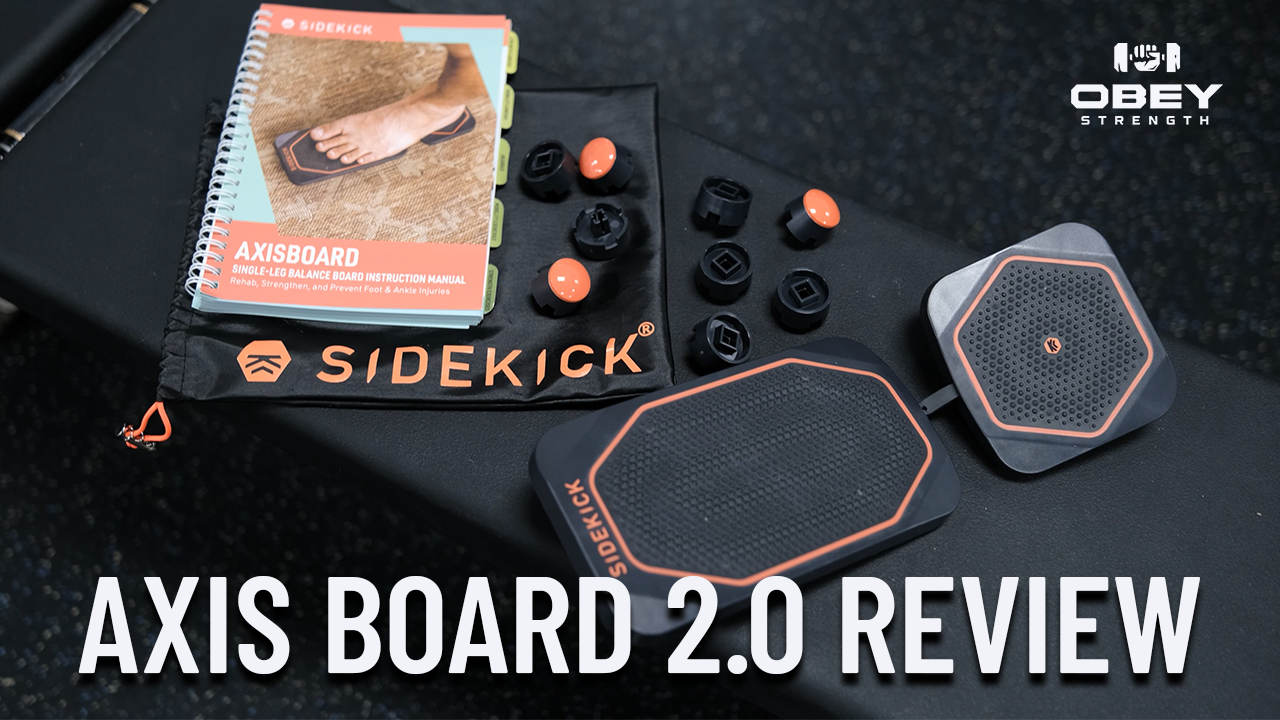
YouTube Review Here: Axis Board 2.0 Review: Is It Worth It for Foot & Ankle Rehab?
Check out the Sidekick Axis Board 2.0 here: Axis Board 2.0
I’ve been using the Sidekick Axis Board 2.0 since around January 2026, both in my own training and with clients in physical therapy. After spending several months with it, I’ve become a pretty big fan of it, especially for foot and ankle training, rehab, balance, and warm-ups.
At first glance, the Axis Board looks like a simple balance board. But what makes it different is how much control you have over where the instability is coming from.
Why I Like the Axis Board
We spend a lot of time strengthening our hips, knees, calves, and ankles, but the foot itself tends to get overlooked.
The foot has a lot going on. You have numerous bones, joints, muscles, tendons, and ligaments all working together to help you move, absorb force, and stay stable.
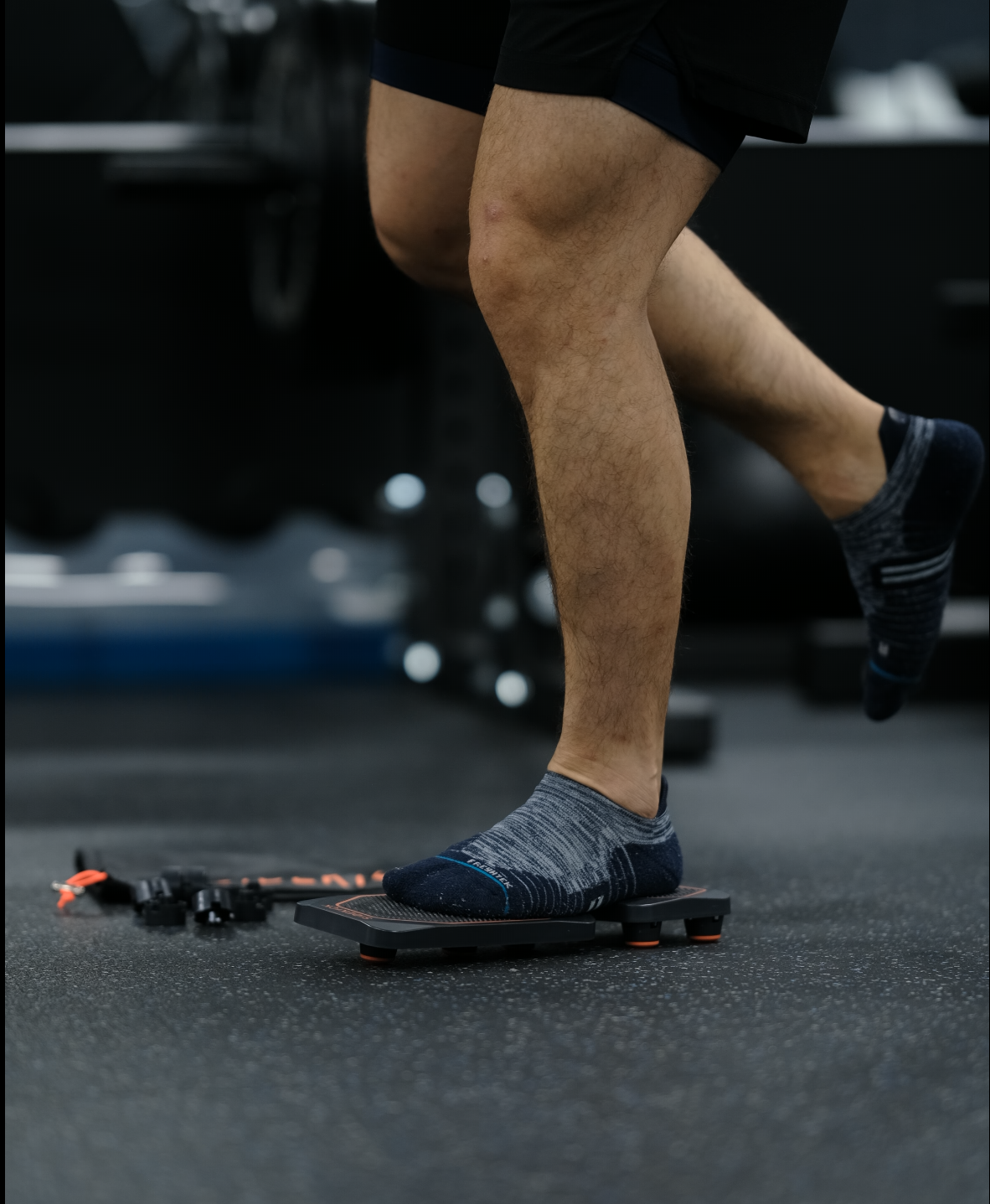
One thing I really like about the Axis Board is that you can separate different portions of the foot and challenge them in different ways.
For example, you can stabilize the rearfoot and heel while creating more instability underneath the forefoot. You can also do the opposite: stabilize the forefoot while challenging the heel and rearfoot.
Even though the foot ultimately works together as one unit, different portions of it still need to move and control force independently.
The Axis Board gives you a way to train that.
You can also challenge pronation, supination, side-to-side movement, and different foot positions that we don't experience much during normal walking.
Most of our day is spent walking straight forward in shoes. We don't spend much time intentionally challenging the foot in different directions.
Balance, Stability, and Proprioception
This isn't traditional strength training.
You're not loading up a barbell or progressively adding 20 pounds to the Axis Board.
Instead, you're challenging the smaller muscles around the foot and ankle to stabilize and react.
That's where proprioception comes into play.
If you're running, jumping, changing direction, or you accidentally step on an uneven surface, you don't have time to look down and figure out where your foot is.
Your body needs to feel what is happening and react.
I've even combined the Axis Board with a color-changing reaction ball. Instead of thinking about my foot, I'm focused on catching the ball with the correct hand while my foot and ankle have to stabilize underneath me.
I really like using it this way because it's more similar to what happens during sports and everyday life.
Axis Board 2.0 Build and Design
The Axis Board 2.0 is a pretty big redesign from the original wooden version.
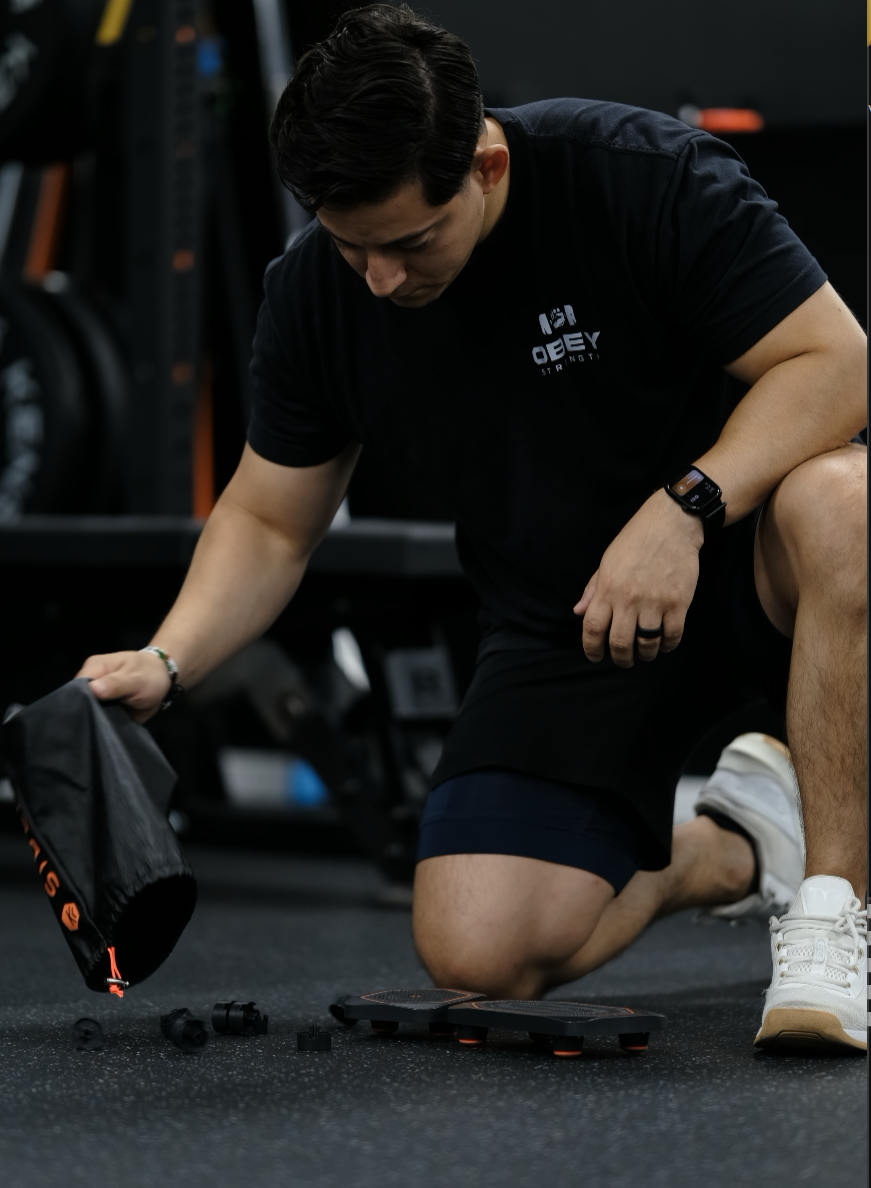
Instead of the longer wooden adjustment pieces used with the original Axis Board, the 2.0 uses smaller snap-on pegs that you can reposition underneath the board.
You can also stack the pegs, which gives you more options for changing the height and creating different foot positions.
Overall, I prefer the look and feel of the 2.0. It feels solid, the textured surface gives you good grip, and the different peg combinations give you a lot of versatility.
There is one thing I preferred about the original design, though.
The longer pieces were simply faster to move around.
With the 2.0, you're dealing with several smaller pegs. It takes a little longer to change configurations, and because they're small, they're also easier to drop or potentially lose.
So while I prefer the versatility of the 2.0, I think the original system was slightly more convenient.
The Instruction Manual Is a Big Plus
One of my favorite parts of the Axis Board 2.0 isn't actually the board, but rather the instruction manual.
There are a lot of different configurations you can create with this thing, and if Sidekick just gave you the board and a bag of pegs, most people probably wouldn't know where to begin.
The manual gives you configurations for mobility, stability, and strengthening exercises.
It also has sections for specific foot and ankle problems, including things like lateral ankle sprains, medial ankle sprains, and Achilles tendinopathy.
It gives you some basic information about the condition and then directs you toward mobility and strengthening exercises that may be useful.
It even tells you which page to go to so you can find the exercise and see how to configure the board.
For someone using this at home, I think that's extremely valuable.
Of course, as a physical therapist, I'm still going to recommend getting evaluated when you're dealing with an injury. The Axis Board isn't going to diagnose you or replace individualized physical therapy.
But maybe you don't currently have access to physical therapy. Maybe you've already finished rehab and you're looking for something to continue using at home.
This gives you somewhere to start.
I also think the manual makes the Axis Board more useful for physical therapists and strength coaches because it gives us additional ideas for how we can use the board with our clients.
What Comes With It?
Inside the package, you get the Axis Board 2.0, the different pegs and accessories, the instruction manual, and a travel pouch.
The pouch is nice because you can throw everything inside and take it to the gym or clinic.
It even fits the board itself.
I do wish the bag were slightly larger and had a dedicated internal pocket for the smaller pegs. Right now, they basically sit loose at the bottom of the bag.
It's not a major issue, but it would make transporting everything a little cleaner.
Who Do I Recommend It For?
I think the Axis Board 2.0 makes the most sense for someone who wants to improve:
Foot and ankle stability
Single-leg balance
Proprioception
Foot and ankle mobility
Control after an ankle or foot injury
I especially like it for runners, lifters, field and court athletes, and people who have dealt with recurring ankle sprains.
I also use it during my own lower-body warm-ups.
I'll usually spend around two or three minutes on each foot before squats, deadlifts, lunges, jumping, or running.
You could even spend five minutes on it in the morning while drinking your coffee just to get the feet and ankles moving.
Final Thoughts
Overall, I've really enjoyed the Sidekick Axis Board 2.0.
It isn't something that should replace traditional strength training, and it shouldn't be the only thing you're doing if you're rehabbing a foot or ankle injury.
You should still progressively strengthen your calves, feet, ankles, and the rest of your lower body.
But as an additional tool for foot mobility, balance, proprioception, and stability, I think the Axis Board gives you something that a standard foam pad or traditional balance board doesn't.
I've enjoyed using it myself, my clients have had fun using it, and after several months with it, it's earned a regular place in both my training and my physical therapy practice.
Work with me for 1-on-1 ankle rehab and strength training
If you are dealing with an ankle sprain, chronic ankle instability, or you are trying to get back to lifting, running, or sport without constantly worrying about your ankle, I offer 1-on-1 online training and rehab coaching through Obey Strength.
That means your plan is built around:
your injury
your goals
your training background
your available equipment
your current strength and tolerance level
So instead of guessing your way through random ankle exercises online, you get a progression that actually makes sense.
If your ankle still feels weak, stiff, unstable, or not fully back to normal, my 1-on-1 coaching can help you rebuild it the right way.